Prince Amedeo of Savoy, the 3rd Duke of Aosta (1898-1942), was the Viceroy of Italian East Africa (Africa Orientale Italiana) between 1937 and 1941. Highly respected by both his Italian subordinates and British adversaries, he died in 1942 as a Prisoner of War in Kenya.
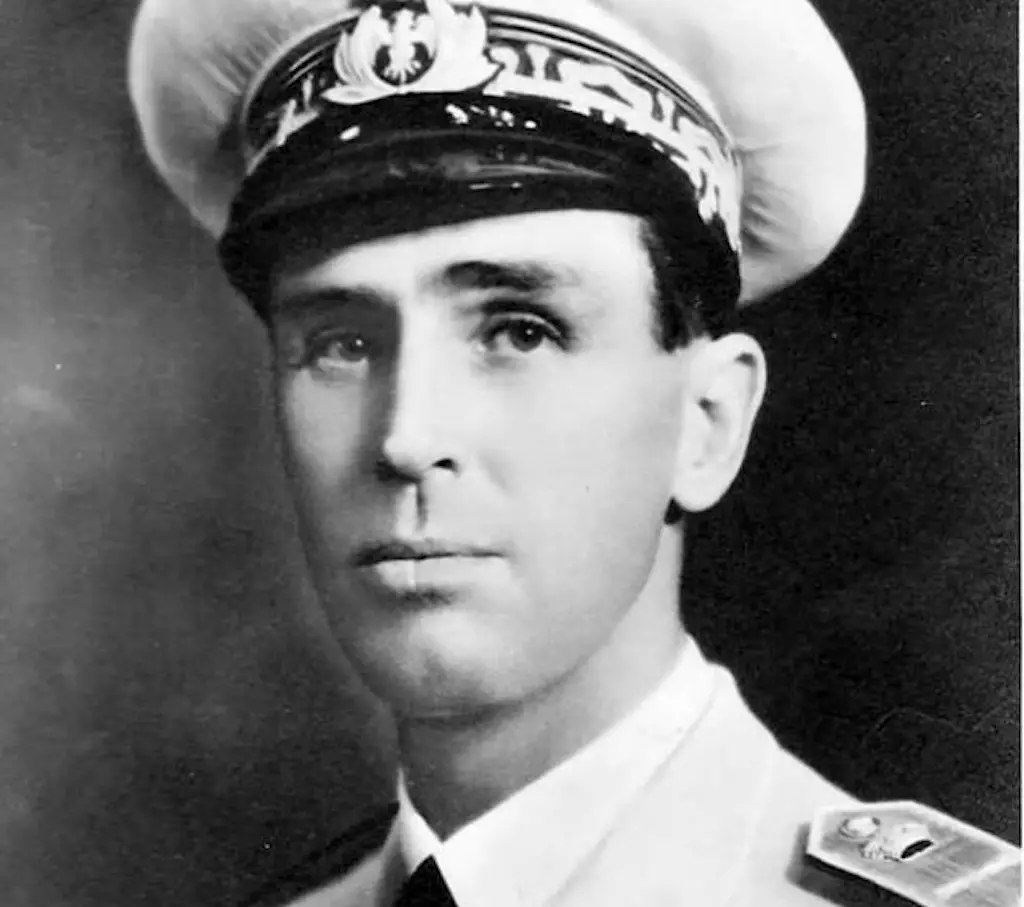
Prince Amedeo of Savoy, 3rd Duke of Aosta.
The global conflict that was World War Two thrust dozens of figures into historical immortality. There were fiery and charismatic national leaders like Winston Churchill and Benito Mussolini. We also witnessed strategic, calculating military geniuses like Isoroku Yamamoto and Erich von Manstein. Emerging into the spotlight that the war provided were larger than life battlefield commanders like Douglas MacArthur and Erwin Rommel. As often happens, though, some figures fade or are forgotten by time and history. One of these men was Prince Amedeo of Savoia-Aosta, or commonly known as the Duke of Aosta.
Early Life and Regio Esercito
Amedeo Umberto Isabella Luigi Filippo Maria Giuseppe Giovanni di Savoia-Aosta was born in Turin on 21 October 1898. His Great grandfather was King Victor Emmanuel II, so Amedeo lived the privileged life of royalty. But by all accounts, he never let this go to his head. He charmed and gained the respect of everyone he met.
Amedeo was a tall man, particularly for the time, as he stood nearly 6’6″. Educated in England, he attended the prestigious Oxford University. Amedeo made numerous friends during his time there while also excelling at Polo, no doubt using his reach to his advantage. He perfected his English, grew fond of British customs and traditions, and by all accounts, thoroughly enjoyed his time in England.
As Italy entered World War One, Amedeo joined the Regio Esercito. As was customary with a man of his status, the Regio Esercito offered him an officer’s commission. Amedeo refused, taking a low rank as a gunner in an artillery battalion instead. Amedeo did not want his exalted place in society to grant him any favors during this great struggle. He fought with distinction on the battlefield during the war, and over time rose to the rank of Major.
Family and Regia Aeronautica
Amedo married Princess Anne of Orléans in 1927 and would have two children with her. In 1931 with the death of his father, he inherited the title 3rd Duke of Aosta. A life of adventure was only the beginning of the new Duke.

Amedeo and his wife, Princess Anne of Orléans.
The Duke of Aosta was enticed to return to military duty in 1932 as the appeal of a new challenge became intriguing to him. He joined the Regia Aeronautica and became a fighter pilot, obtaining the rank of Colonel. Stationed at Gorizia in northern Italy, he lived with his family in the Castello di Miramare for five enjoyable years while honing his talents behind the stick.
Actions in Libya
As a squadron commander, he participated in the pacification of Libya, helping to bring an end to the 20-year struggle in the African colony. Back home, his popularity soared as the press heralded the attacks he led on Omar Kukhtar’s troops, the last major warlord fighting Italian occupation. With Omar and his Senussi warriors driven out of Libya and into Egypt, peace finally came to the Italian colony.
Viceroy and Governor of Abyssinia
Italy just completed its conquest of Ethiopia in May of 1936, but things were not running smoothly. Large groups of Ethiopians continued fighting against their Italian conquerors, and civil unrest remained high throughout large portions of the country.
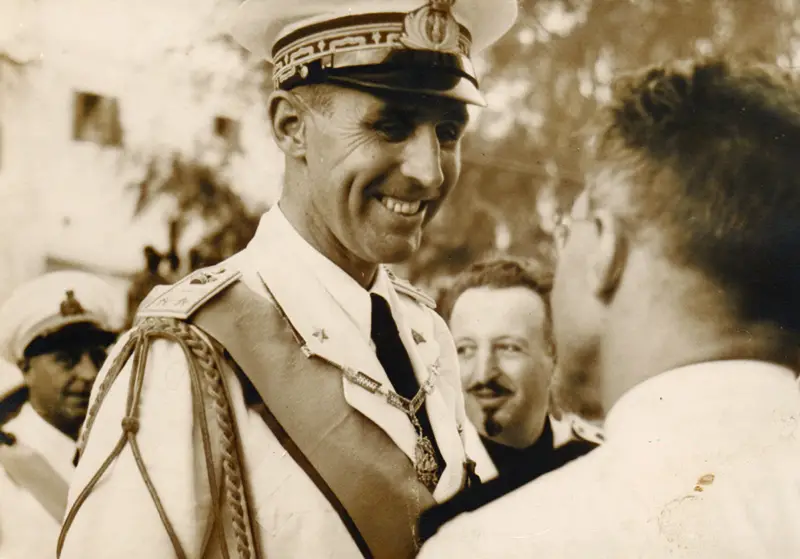
Amedeo around 1940.
Marshal Rodolfo Graziani, who helped lead the campaign to conquer Ethiopia, was appointed Viceroy and Governor-General following the Italian victory. He thus attempted to run the country as he had the war, ruthlessly and without compassion. Captured Ethiopian forces fighting against them faced immediate execution.
Under Graziani’s leadership in the war, Italian forces employed mustard gas against Ethiopian troops often dropped from planes above. With rampant dissidence amongst the Ethiopians, Italian forces found themselves spending vast amounts of time, money, and manpower to pacify the country.
In December 1937, Mussolini asked the Duke to take charge of the colony and try to reverse the unfavorable situation there. The Prince accepted and became the new Viceroy and Governor-General of Ethiopia. On top of this responsibility, he also became appointed the Commander-in-Chief of all Italian forces in Eritrea, Ethiopia, and Italian Somaliland. On 28 December 1937, the Duke, piloting his aircraft from Massawa, arrived in Addis Ababa to officially take his post.
Infrastructure and Quality of Life Improvements
The Duke of Aosta immediately put his stamp on governing his colony. The use of gas ended, and he adopted a more even-handedness with the public. One of the first things he tackled was overhauling the country’s infrastructure. The Duke intended to increase the standard of living throughout the country, not just for those Italians living there, but for the native Ethiopians as well.
Scores of men began the immense job of improving or rebuilding over 2,000 miles of roadway throughout Ethiopia. Around the country, construction of dozens of hospitals, schools, and hotels create services and jobs necessary for their operations. The water system and port facilities also received an overhaul under this ambitious plan.
Prince Amedeo also enacted sweeping social changes across the land. He outlawed slavery, freeing a class of people that never tasted freedom. He also granted rights to several Muslim groups that had been denied before the Italian conquest. Definite improvements came to the country under the Duke’s guidance over the next couple of years.
Preparing for War
The Duke also faced the immense task of preparing the East African colonies for what appeared to be an unavoidable upcoming war. With much to do and little time or money, the urgent need for facilities to house an influx of troops across the fledgling “Italian Empire” required immediate attention. Airfields and naval bases needed repair or construction from the ground up. An army of colonial troops needed to be raised, armed and trained. A supply of food, ammunition, and fuel needed to be produced and stored at the appropriate wartime levels. As the months and years began to pass, it became clear to both those in Rome and the leaders in East Africa that with the outbreak of war, the colonies would, for the most part, be fending for themselves.
Prince Amedeo in World War 2
On 10 June 1940, Italy entered the war. Knowing they possessed a limited supply of raw materials and manufacturing capabilities, Italy needed a quick and decisive war to have a real chance at victory.
The Italians launched small operations against the British in Kenya and the French in French Somalia in June of 1940. The main assault of the Duke’s offensive, British Somaliland, started on 3 August 1940. Prince Amedeo commanded about 25,000 men, fighting under the leadership of General Guglielmo Nasi. They captured town after town during this steady advance. By 19 August 1940, the British Royal Navy evacuated the last remaining troops.
The victory was Italy’s. Many historians consider this battle Italy’s greatest victory during the entire Second World War. However, the cost was high. Italians suffered 2,000 dead and wounded in order to add British Somaliland to their East African Empire.
The celebration did not last. British and Commonwealth forces continued to wear down the isolated Italian forces in Italian East Africa. It became a battle of attrition in which Italian forces found themselves alone and without a means of resupply.
Related: Italian Resistance at the Battle of Keren
Defeat and Surrender
The bitter campaign in Italian East Africa lasted until May 1941. Outgunned and lacking vital supplies, including water, Prince Amadeo saw the futility in continuing the fight. Before offering a surrender, he provided an opportunity for his indigenous troops to return to their village. Of the 3,000 indigenous troops remaining, only 15 abandoned their post.
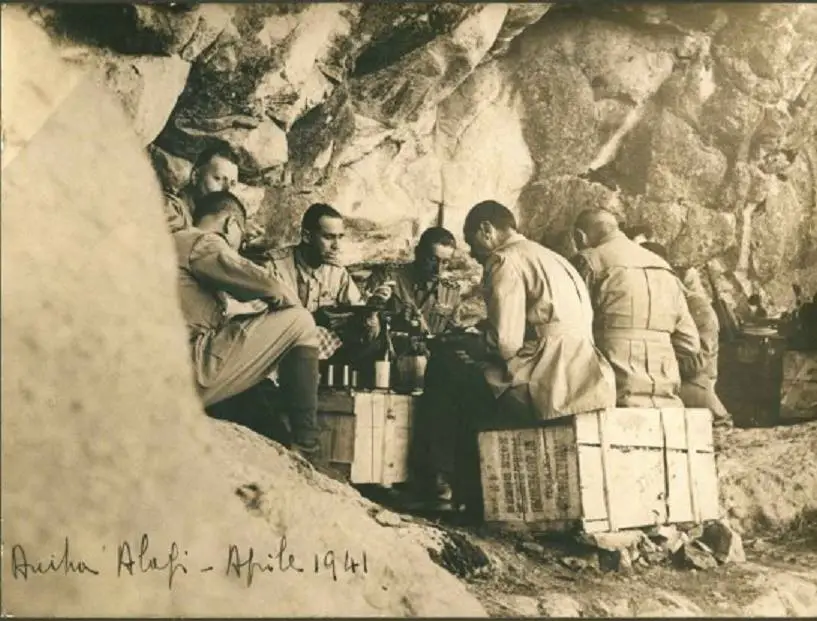
The Prince of Savoia Aosta with his troops in Amba Alagi stronghold in April 1941.
The Duke of Aosta stood silently in front of the makeshift burial ground. Row after row of small wooden crosses, each marking the site of one of the many soldiers who had fallen during the previous week’s battles. Behind him standing in the blazing sun was British Brigadier Marriott, waiting to escort the Prince from the battered stronghold of Amba Alagi in northern Ethiopia, and into captivity.
The day was 20 May 1941. Italian East Africa had fallen to the British. But sporadic resistance continued. Italian General Guglielmo Nasi and his men entrenched in the city of Gondar would hold out against the enemy till nearly December 1941, and Italian guerrilla fighting would continue well into 1943. But the war in East Africa was essentially over.
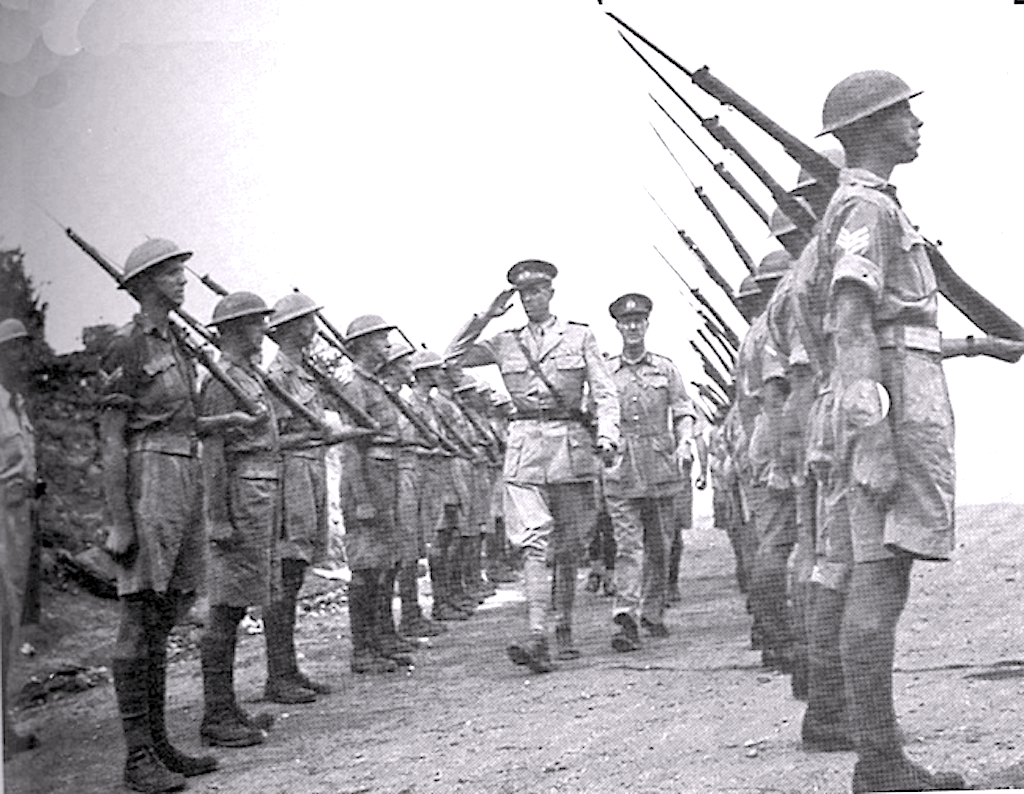
The Duke of Aosta during the surrender to the British.
The stiff Italian resistance earned the respect of the Commonwealth forces. Because of that, General Platt provided full military honors to the surrendering Italian forces.
Prisoner of War and Death
Amedeo became Prisoner of War 11590 and interned in Dònyo Sàbouk, Kenya. Even as a prisoner, he fought for better living conditions of his Italian subordinates.
Prince Amedeo died on 3 March 1942 in a Nairobi, Kenya hospital after suffering complications from Malaria and Tuberculosis. He is buried at the Italian Military Memorial at Nyeri, Kenya.
Related: Italian Memorial Catholic Church at Nyeri, Kenya