Background on the Savoia Marchetti SM.84
In 1940, the Regia Aeronautica received a new addition to its bomber force, the Savoia Marchetti SM.84, Designed to replace the SM.79, it never succeeded in equaling the performance of its illustrious predecessor. The issue lay principally with its poor maneuverability, making it anything but ideal in the role of torpedo-bomber. Additionally, its Piaggio P.XI engines lacked reliability.
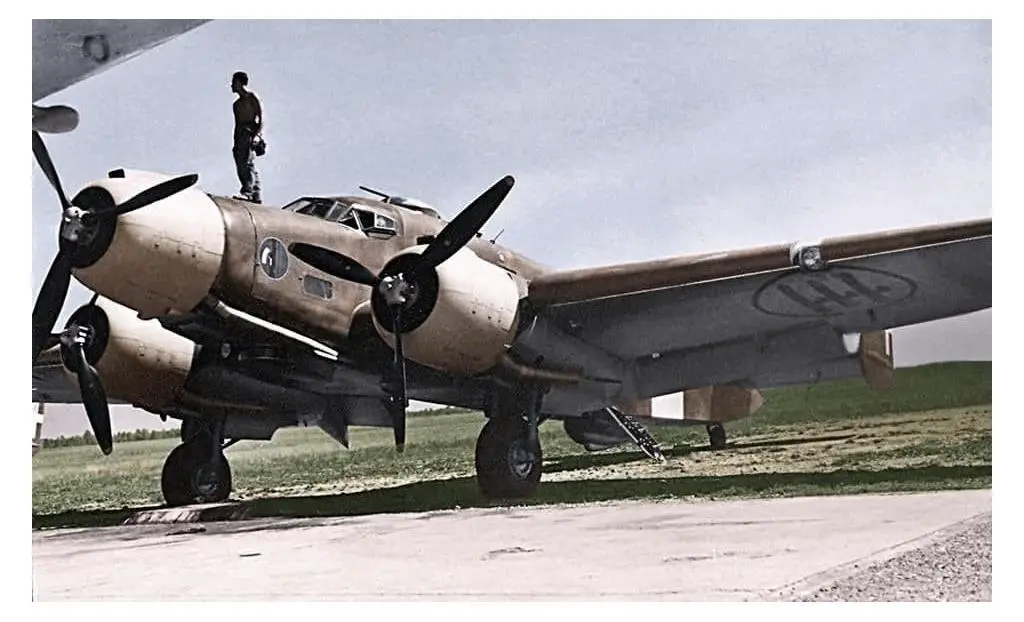
Although designed to do so, the Savoia-Marchetti SM 84 never successfully replaced the SM.79 as a bomber.
The project launched in 1939 and the prototype’s first flight took place on 5 June 1940. Marchetti based his proposal on utilizing the SM.79 wings, but modifying the fuselage and adding more powerful engines.
Capabilities
The SM.84 was a low-wing monoplane made of wood and steel tubing covered with fabric, plywood, and steel tubing. The fuselage lacked the characteristic humpback appearance of the SM.79 while doubling the empennage.
The SM84 power plant consisted of three 1,000-hp Piaggio P.XI RC 40 radial engines driving three-bladed variable-pitch metal propellers.
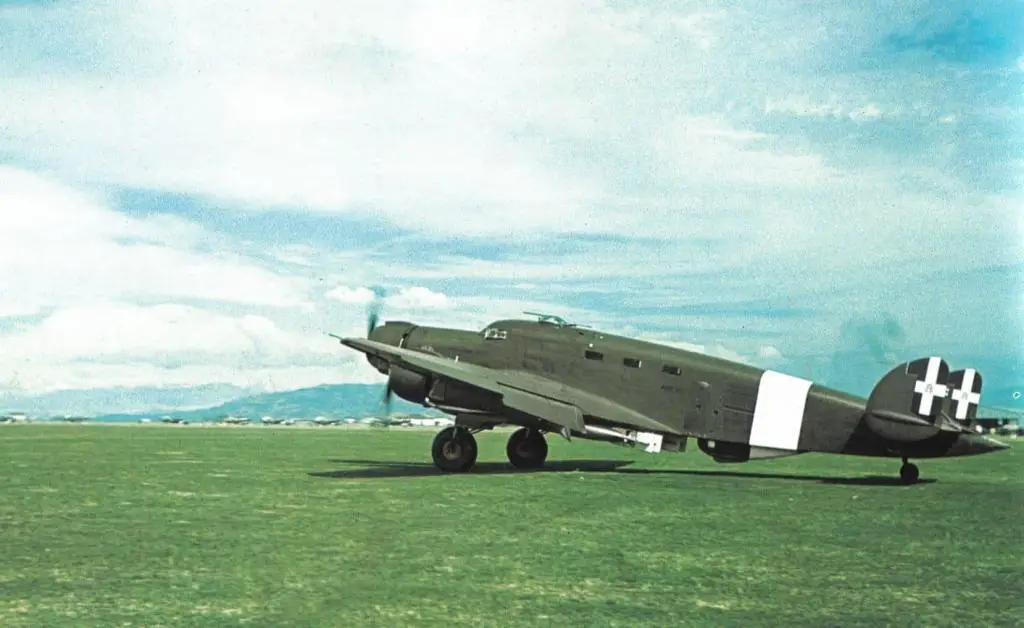
Defensive armament consisted of four 12.7 mm Scotti machine guns in the back, belly and two on the sides of the aircraft. The aircraft had no ability to fire rounds forward. The bomb load was housed either in the belly 2,204 lb (1000 kg) or outside the fuselage with two torpedoes, two 1,101 lb (500 kg) bombs or two 1,760 lb (800 kg) of bombs. Normally the aircraft carried one torpedo or 2,200 lbs (1,000 kg) of bombs.
The aircraft reached a top speed of 290 mph (467 km/h) at 15,000 ft with a service ceiling of 25,918 ft (7,900 m) and a range of 1,267 miles (2,040 km). However, the aircraft was extremely difficult to fly over 16,000 ft (5,000 m).
Design Flaws
Prior to the prototype’s maiden flight, several tests were conducted using a specially modified SM.79 with double empennage and 860 hp Alfa Romeo engines. The aircraft performance and potential were deemed generally satisfactory. However, this was not the case when the Savoia Marchetti SM.84 prototype began its evaluation tests. It immediately proved to have a series of problems, especially at takeoff and landing. The principal issue lay with the great weight of the wings and the inadequacy of the vertical empennage.
Moreover, the Piaggio engines were unreliable and difficult to build. Despite these problems, the Regia Aeronautica ordered a large number of SM-84s. In fact, the initial request for 246 aircraft eventually increased to 309 aircraft.
Service History
The Savoia-Marchetti SM.84 began its operational career with the 41st Bomber Group on 2 February 1941. Several months later SM84s joined the 36th Stormo Aerosiluranti.
The SM84 served in the torpedo-bomber role for about a year. Its most notable achievement was the torpedoing of the HMS Nelson, which put British Battleship out of commission for six months. However, this was at the cost of six aircraft losses. By the autumn of 1942, the Regia Aeronautica reassigned the SM 84 to bomber units.
In the meantime, attempts to improve the aircraft’s performance led to the SM 84bis. This version included modifications to the wings and cockpit as well as improved engine ventilation and a better torpedo launch control.
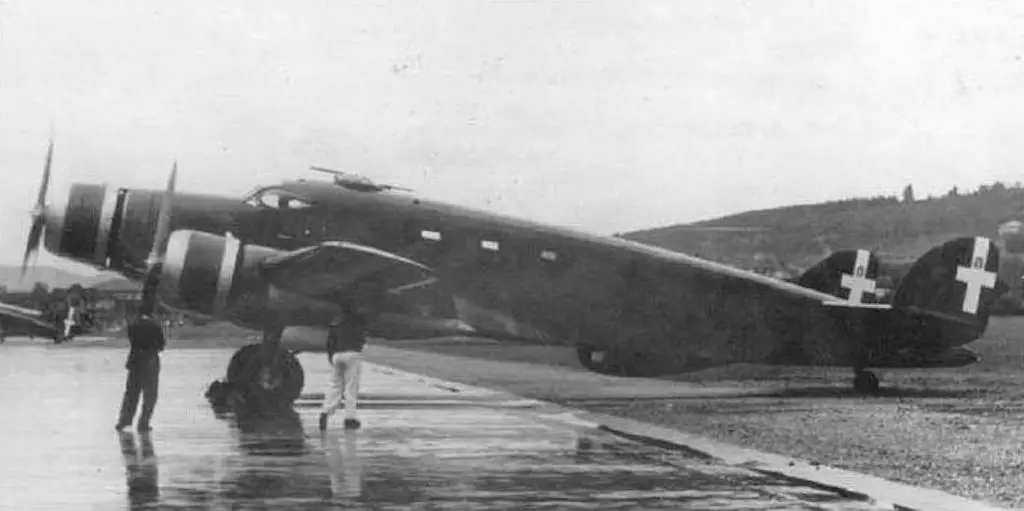
Ultimately, the aircraft was phased out in preference of the Cant Z.1007 or the SM.79bis.
In July 1943, the 43rd Stormo was the only unit operating the SM 84. On 08 September 1943, approximately 150 bombers remained, of which about 100 could be considered operational.
Following the armistice, the Germans incorporated 12 or so SM-84s into the 132nd Transport Group and served until the end of the war.
Specifications
| Model | Savoia-Marchetti SM.84 |
|---|---|
| Crew | 5-6 Pilot, Co-Pilot, Flight Engineer/Gunner, Radio Operator, Bombardier, Rear Gunner) |
| Powerplant | (3) Piaggio P.XI RC.40 Radial Engines 1000 HP each |
| Maximum Speed | 290 mph (467 km/h) |
| Max Ceiling | 25,919 ft (7,900 m) |
| Range | 1,267 miles (2,040 km) |
| Length | 58.83 ft (17.93 m) |
| Height | 17.87 ft (5.42 m) |
| Wingspan | 69.55 ft (21.20 m) |
| Armament | (4) 12.7 mm (0.5 in) Scotti machine gun Bombs: 1000 kg (2,204 lb) or one external 450 millimetres (17.72 in) torpedo |
| Weight | Empty: 19,731 lb (8,950 kg) Max: 29,982 lb (13,600 kg) |