The Savoia Marchetti SM.79 Sparviero is a tri-engine bomber utilized by the Italian Regia Aeronautica during World War Two. The aircraft has a pronounced hump on the upper forward fuselage housing the dorsal gunner’s position. This hump is what gives the aircraft a very unique look and earned it the nickname of “Gobbo Maledetto” or Damned Hunchback. It is also arguably one of the finest land-based torpedo bombers of the Second World War.
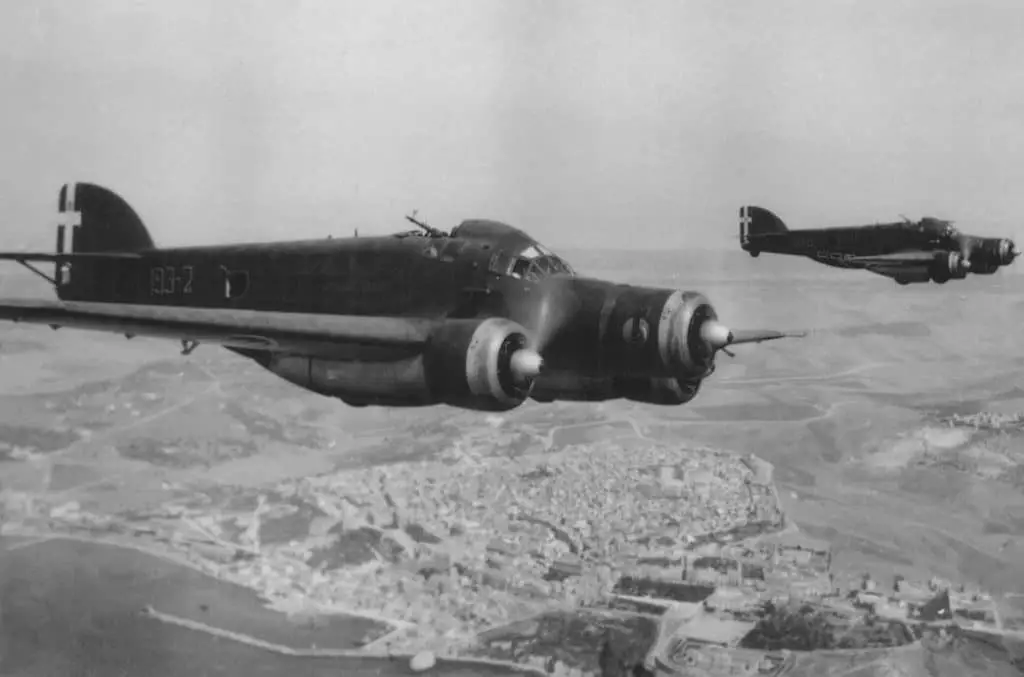
The deadliest Italian aircraft of World War Two is the Savoia-Marchetti SM.79 Sparviero.
Considered the most lethal Italian aircraft of World War Two, it is responsible for damaging and sinking dozens of allied ships in the Mediterranean Sea. From the beginning of hostilities, it presented a constant threat to Allied shipping.
In fact, the Savoia-Marchetti S.79 became the most widely used Italian bomber during the war. Between the plane’s inception and the end of manufacturing in 1945, Savoia Marchetti produced some 1,350 units of the bomber and its assorted variants.
SM.79 Sparviero Background
By 1934, 3-engine transport planes were already a well-established development in aviation. However, Italy had yet to produce one for military purposes. The prototype that would ultimately become the Sparviero first flew on 28 September 1934 utilizing three 590 HP Piaggio Stella P.IX R.C.40 engines. The Regia Aeronautica saw the potential of the S.79P in a bomber role and conducted an evaluation. On 8 July 1936 the S.79M prototype, MM20663, made its maiden flight as a bomber. The engines were eventually replaced with three Alfa Romeo 126 RC.34 rated at 750 HP each.

Cockpit and display panel of the Savoia-Marchetti Sparviero.
Standard Armament
As its standard armaments, the aircraft boasted a total of three main machine guns. These guns were 12.7 mm, while another two were 7.7 mm. With these five machine guns positioned throughout the plane’s fuselage, aircrews had access to robust firepower and the ability to fire at multiple angles away from the bomber. The plane was also capable of carrying just over 2,700 pounds of bombs internally.
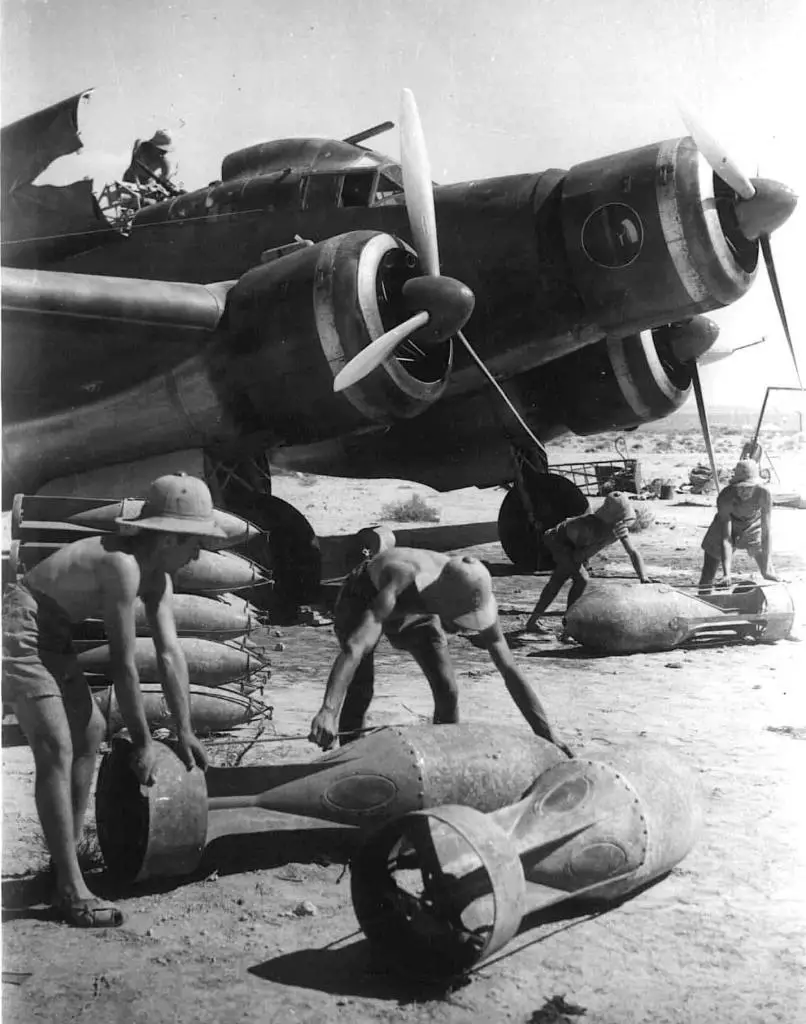
Loading bombs in North Africa, 02 August 1940. Archivio Centrale dello Stato.
Design Flaws
For its offensive and defensive capabilities, the S.79 included several design flaws that hampered its combat effectiveness. Notably, the plane had no intercom or other communication systems that would allow crew members to speak directly with one another. As a result, bombardiers could not receive direct signals from pilots, leading to bombing lags that sometimes made strikes less effective than they could otherwise have been. The plane also lacked a stabilization system, which by then was standard equipment on several more advanced warplanes. Furthermore, a lack of oxygen masks prevented the aircraft from engaging in high altitude operations.
Sparviero Service History
The first combat involvement of this Torpedo Bomber occurred during the Spanish Civil War. Sparviero’s served with the Aviazione Legionaria to support Francisco Franco’s Nationalist faction. The Italian military deployed the bombers mainly in Catalonia, where both Republican forces and militias aligned with various socialist, communist and anarchist groups opposed the Nationalist forces. Over 100 Sparviero’s served in this conflict and gave a good showing.
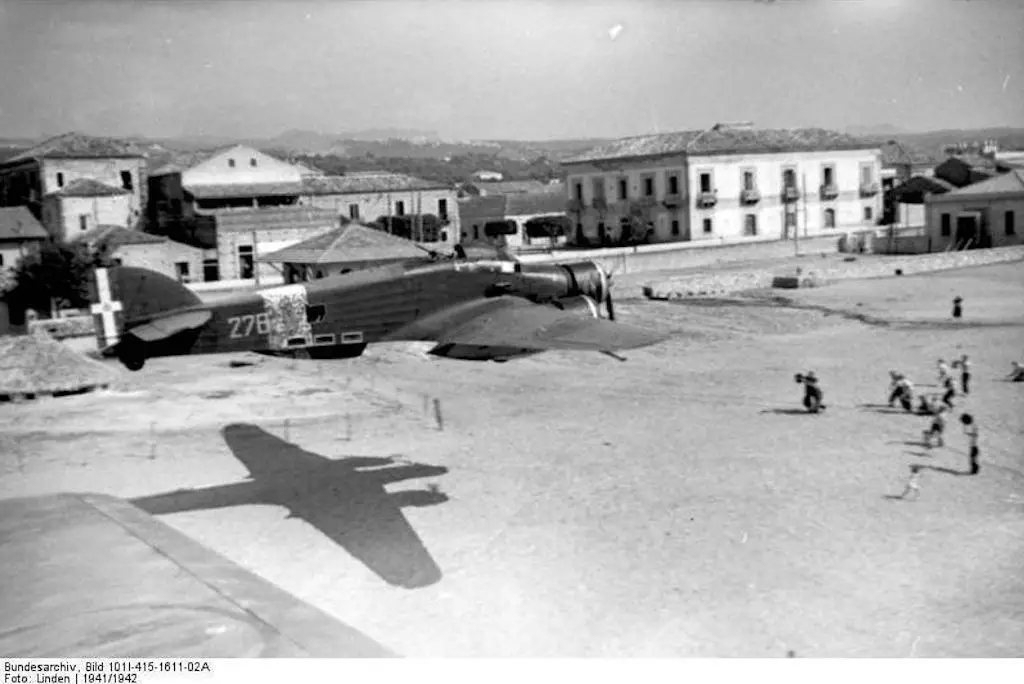
A Savoia Marchetti of the 278° Squadriglia Aerosilurantili flies over a beach in Catania, 1942. Image credit: Bundesarchiv.
Whitehead Torpedo Works
One of its optional weapons proved to be among its deadliest during World War II. On 25 July 1940, the Italian Torpedo Bomber unit known as the Reparto Speciale Aerosiluranti formed. SM79 II Torpedo Bomber from this unit began carrying the 17.7″ 450 mm torpedo built by Whitehead Torpedo Works. This torpedo measured 17.9 ft (5.46 m) long, weighed 1930 lbs (876 kg), and carried an explosive charge of 374.5 lbs (170 kg). Although two Whitehead Torpedoes could be mounted, it greatly reduced the bomber’s performance. The extra weight of the torpedoes decreased their speed. Consequently leaving them vulnerable to attack from anti-aircraft guns and other aircraft. Therefore, only a single Whitehead was mounted in the port ventral position.
Savoia-Marchetti S.79 Sparviero Bomber Units (Combat Aircraft)

With this capability and its impressive range, the Sparviero could easily target ships in the open sea, allowing it to be used as an effective check against enemy naval activities.
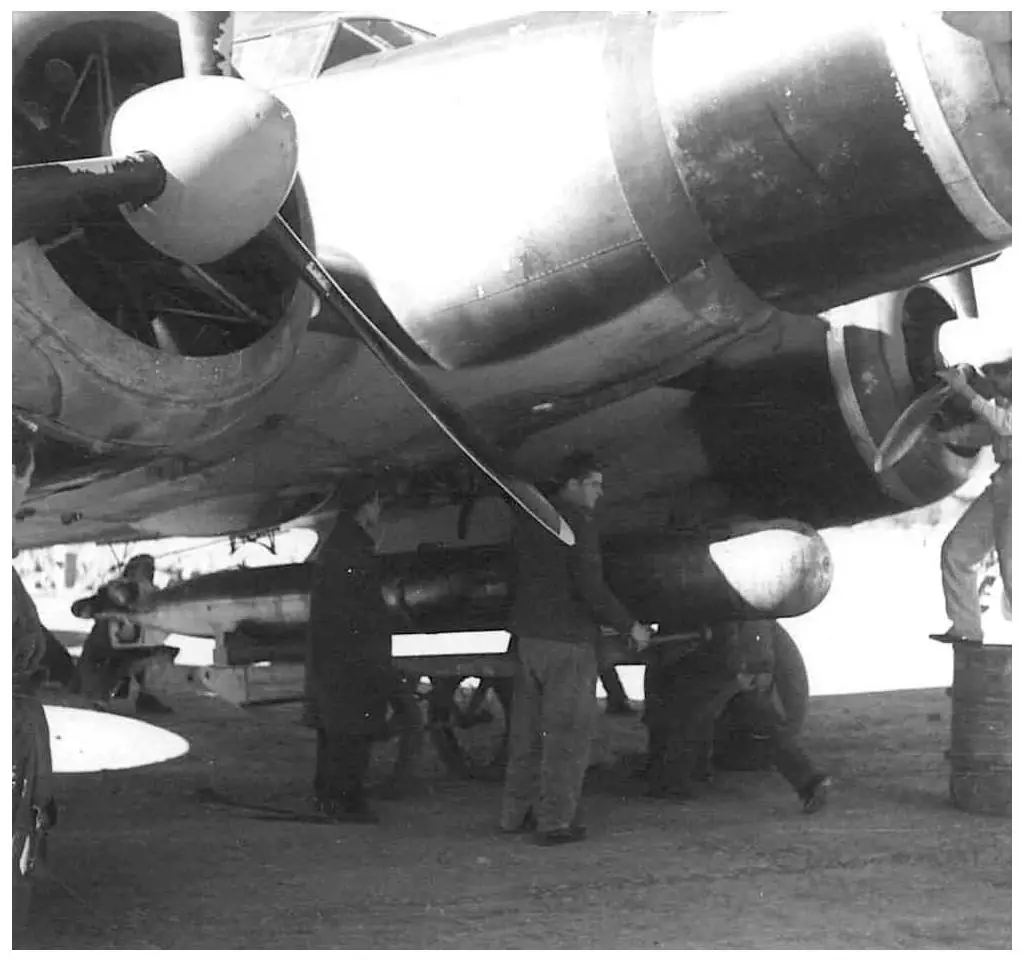
Loading a Whitehead Torpedo on the Aegean Front in the winter of 1942. Image: Centro Archivio dello Stato.
Torpedo Bomber in the Mediterranean
The SM.79 saw considerable use in the Mediterranean theater during World War II. Torpedo bombers from the Reparto Speciale Aerosiluranti effectively targeted Allied shipping, disrupting the transportation of troops and materiel to combat zones. According to HistoryNet:
Torpedo-armed SM.79s either sank or damaged 20 warships, and 19 enemy merchant ships were put out of action and their cargo destroyed. It is estimated that they were responsible for destroying as much as 320,000 tons of enemy shipping
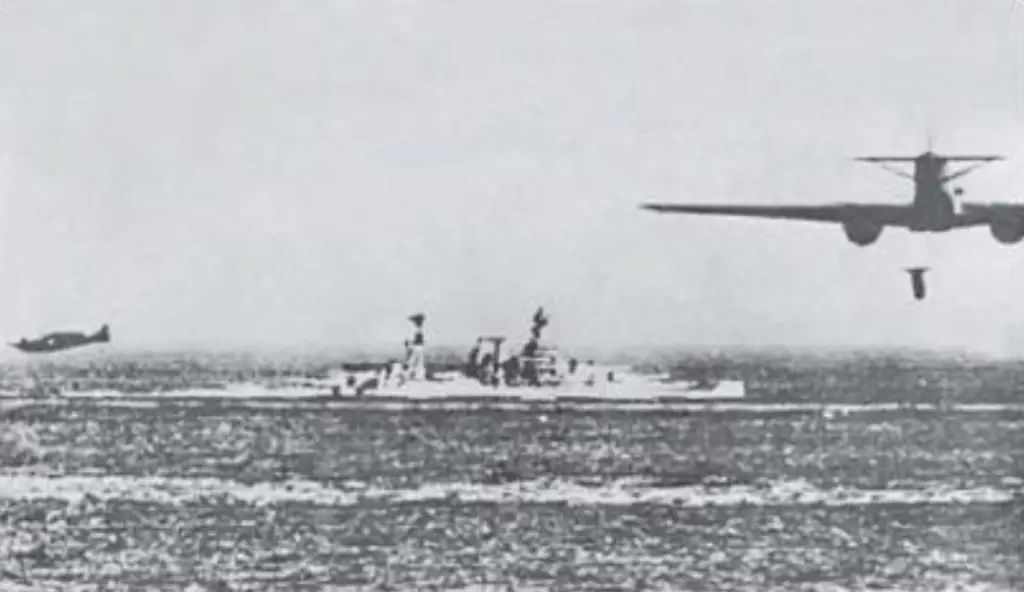
A Sparviero drops a Whitehead Torpedo towards the HMS Barham (1941).
North Africa
Some SM79s also served in Italian air operations in North Africa. Approximately 100 aircraft served during the peak of operation in late 1940. The aircraft mainly bombed soft ground targets, British light forces and advance columns as well as naval vessels. By the end of 1941, very few aircraft remained in theatre.
One of the interesting aspects of the SM 79’s use is the way in which its deployment changed during the war. Initially, the planes launched their torpedo attacks on enemy shipping individually. Later on in the war, the planes deployed in groups in order to inflict more damage and avoid being shot down. From 1942 onward, a typical attack grouping consisted of five bombers, often accompanied by Macchi C.200 fighters capable of protecting the larger planes from aerial attack.
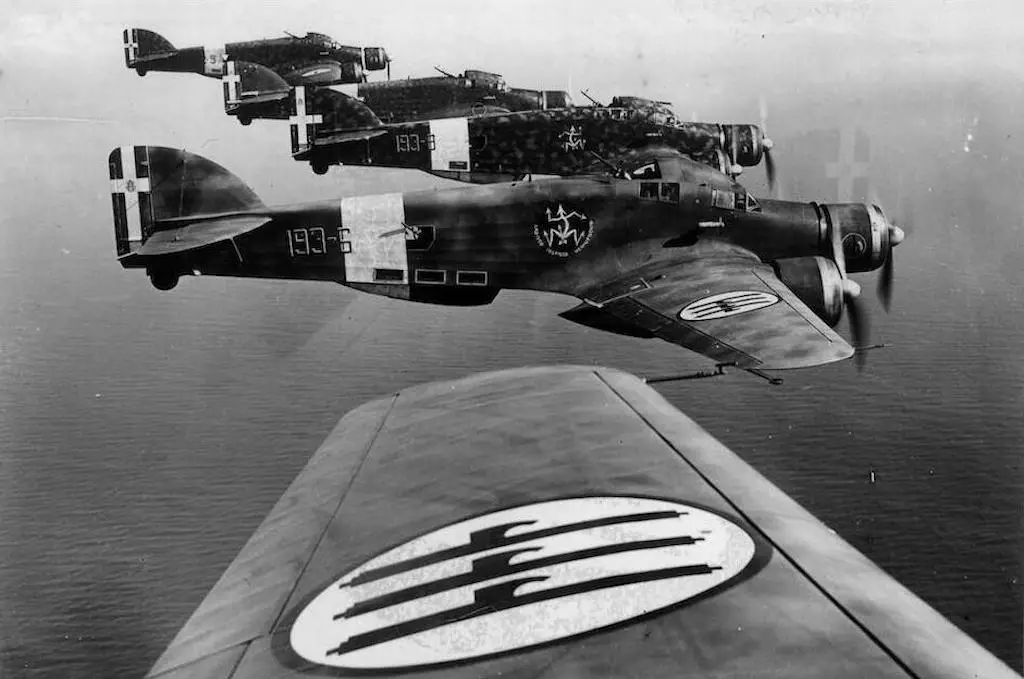
A formation of torpedo bombers. Image dated 1941. Archivio Centrale dello Stato.
Intriguingly, Italy also sold several of these bombers to Yugoslavia in 1939. A fact which resulted in their direct use against Axis forces when Germany invaded that nation in 1941. The invading German forces destroyed most of the S.79 bombers owned by Yugoslavia, but some survived and served in the subsequent government set up by the Axis powers. The bomber also made up part of the air force of Croatia, which split off from Yugoslavia during the invasion.
SM.79 Variants
Throughout the plane’s service history, several variations on the aircraft existed. Below are the variant designations and basic descriptions of their unique characteristics:
- 79-P: Original prototype model, equipped with Piaggio Stella engines
- 79-I: First production, equipped with Alfa-Romeo engines
- 79-II: Torpedo bomber model
- 79-III: Armament improvement on the SM.79-II
- 79K: Variant made for export to Yugoslavia
- 79B: 2-engine variant made for general export purposes
- SM.83: Variant used for civilian transport
In addition to these more distinct variations, Italian engineers created the S.79C and S.79T models, both of which are only very mild variations on the original design.
A Successful Design
Owing largely to its role in disrupting Allied shipping in the Mediterranean, the Savoia Marchetti SM 79 proved to be an important weapon for the Italian armed forces during World War II. As a result, the Sparviero and its variants saw wide use in operations ranging from North Africa to the Balkans. The widespread export of this warplane also allowed it to find its way into the air forces of several countries besides Italy. For a number of years, new bombers such as the Savoia-Marchetti SM.84 never completely replaced the Sparviero during the war.
Following the end of World War II, the surviving Sparvieros continued to serve as part of the air force under the new Italian government. Italy ultimately retired the plane in 1952. However, a few remaining units operated by the Lebanese military continued to serve actively until 1959.
Specifications
| Model | Savoia-Marchetti SM.79 |
|---|---|
| Crew | 6 Pilot, Co-Pilot, Flight Engineer/Gunner, Radio Operator, Bombardier, Rear Gunner) |
| Powerplant | (3) Alfa 128 R.C.18 Radial Engines 750 HP each |
| Maximum Speed | 267 mph (430 km/h) |
| Max Ceiling | 24,600 ft (7,500 m) |
| Range | 1,180 miles (1,900 km) |
| Length | 51 ft 1½ in (15.6 m) |
| Height | 15 ft 8.25 in (4.6 m) |
| Wingspan | 66 ft 3 in (20.20 m) |
| Armament | (3) 12.7 mm (0.5 in) dorsal Breda-SAFAT machine gun (1) 7.7 mm (0.303 in) machine gun Bombs: 1,250 kg (2,755 lb) internal bomb load, or two external 450 millimetres (17.72 in) torpedoes |
| Weight | Empty: 15,311 lb (6,945 kg) Max: 23,854 lb (10,820 kg) |