The three-engine formula, seemingly preferred by Italian manufacturers, obtained another noteworthy representative in the CANT Z.1007. This medium bomber, together with the SM.79 and BR.20, constituted the Regia Aeronautica’s standard equipment during World War Two.
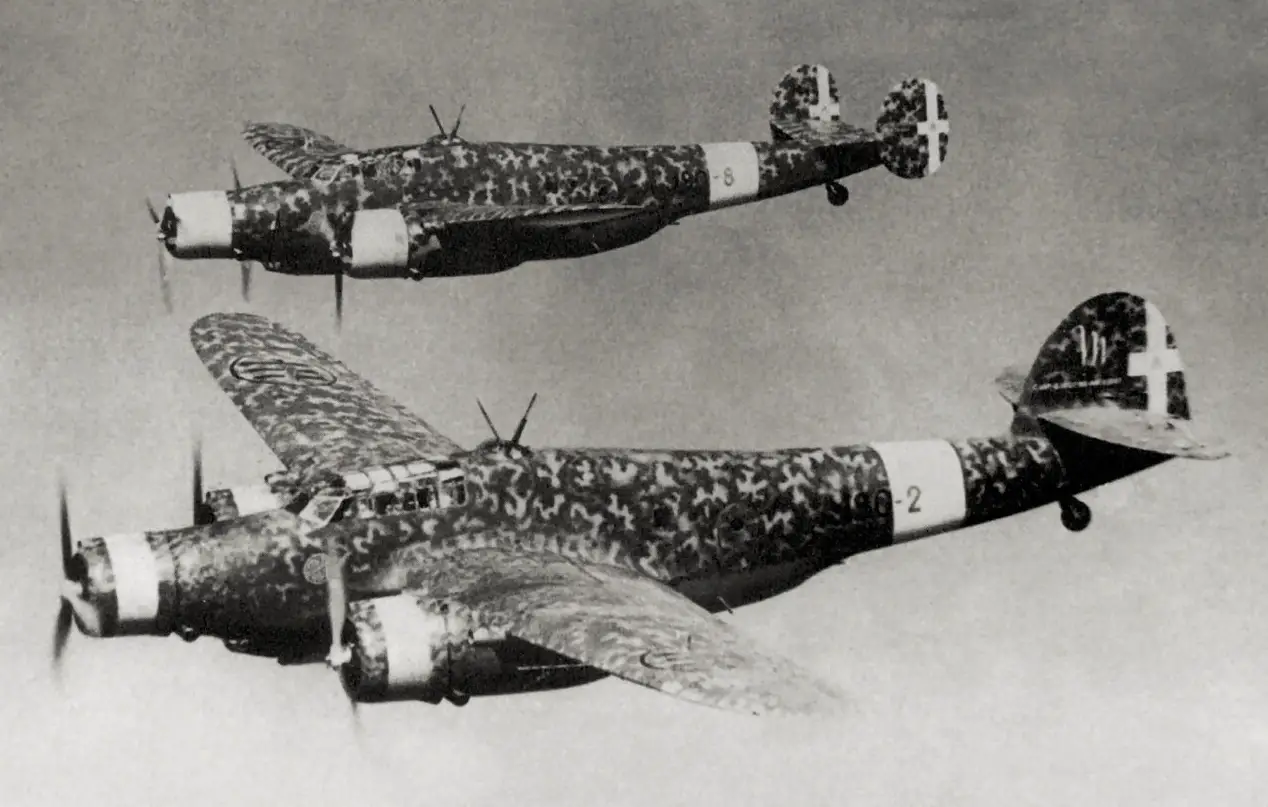
CANT Z.1007 Alcione in flight. Image: Public Domain.
The Cantieri Aeronautici e Navali Triestini (CANT) built a total of 560 aircraft in three production series from 1939 to 1943. The CANT Z.1007 Alcione saw action on all fronts, proving to be an effective aircraft. However, structural weakness were noted in extreme climates, such as in Africa and Russia, due in large part to it being built entirely of wood.
Design and Development
Chief Engineer Filippo Zappata launched the project in 1935 with the first prototype flying on 11 March 1937. However, flight tests did not produce the expected results. This was due, above all else, to the engines. The three Isotta-Fraschini Asso XI liquid-cooled engines driving two-bladed wooden propellers proved incapable of generating their rated power of 840 hp. A series of modifications were carried out with the aim of improving the aircraft’s performance. This included the introduction of a three-bladed Alfa Romeo metal propeller. The first production series consisting of 34 aircraft included the installation of annular-type frontal radiators.
Nevertheless, problems concerning the lack of reliability of the engines remained virtually unsolved in the aircraft built between February 1939 and October 1939. The problem was so great that the evaluation tests, carried out mainly by units of the 16th Stormo based in Venice, advised against the Z.1007′s operational use.
Variants
In the meantime, the designers completely reworked the aircraft. The new design incorporated three 1,000 hp Piaggio IX radial engines. This new prototype, called the Z.1007bis, first flew in 1938. It included a substantial modification compared to its predecessor. Apart from the engines, the cross-section of the aircraft had been enlarged and completely reworked. Additionally, the design included an increase in overall dimensions. Other changes regarded the defensive positions on the back and belly and the tail plane, characterized by lower horizontal empennages.
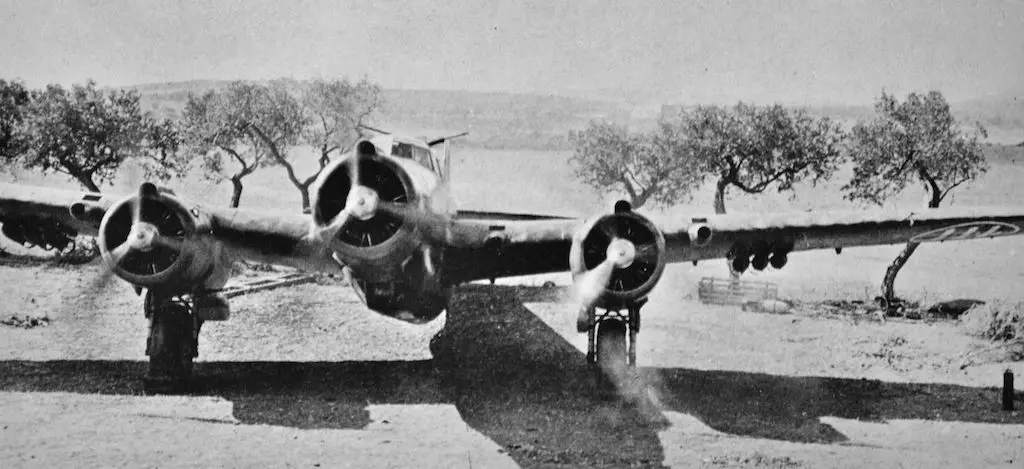
A 1941 photo of a CANTZ.1007 bis in Sicily preparing for a bombing mission in Malta. Image: Public Domain.
In the course of production, the Series I-III of the Z.1007bis had a single rudder. The Series IV-IV had twin fins and rudders. The effectiveness of the changes became apparent during flight-testing and official evaluations carried out on eight pre-series aircraft. The Z.1007bis proved to have a maximum speed of 283 mph at an altitude of 15,100 ft. It had a range of 1,242 miles and a maximum ceiling of 27,630 ft. The crew consisted of 5: a pilot, a co-pilot, a radio operator/gunner, a tail gunner and a gunner that operated either of the beam guns. Defensive armament consisted of two 12.7mm machine guns in ventral and top turrets and two 7.7mm machine guns in beam positions. The Z.1007bis carried a maximum bomb load of 2,646 lbs of bombs or two 17.7-inch torpedoes.
A final version, the Z.1007ter, appeared in early 1943. It utilized the Piaggio P.XIX radial engine that gave the Z.1007ter a top speed of 304 mph and a ceiling of 32,890 ft. Italy built 35 of these variants.
World War Two
Unit deliveries of the Z.1007bis commenced in the spring of 1940 to the 106th and 107th Groups of the 47th Stormo. However, none could be considered operational when Italy entered the war in June 1940. The Z.1007′s first mission occurred in September 1940 when six of the single fin types joined units sent to Belgium to bomb England. It was not an outstanding debut as the CANTs took part in just one mission. On 11 November 1940, five of the aircraft acted as decoys to draw RAF fire away from the main Italian bombing mission.
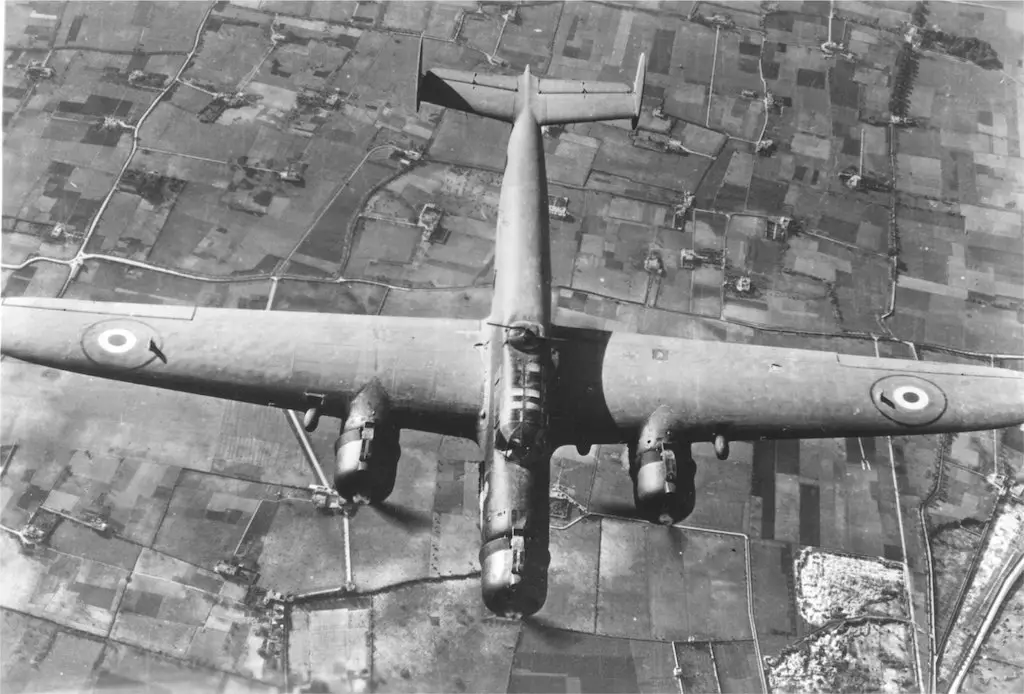
A CANT Z.1007bis bomber with the Italian Co-Belligerent Air Force over Southern Italy in late 1944. Image: Public Domain.
Also, in October 1940, the CANT Z.1007 took part in the invasion of Greece. It also served in the Mediterranean, North Africa and especially against Malta. On the Russian front, the use of the three engine bombers was sporadic and intermittent.
On 21 May 1941, a CANT Z.1007 sank the HMS Juno near Crete. The Juno sank in 97 seconds.
Armistice
Following the armistice, the Aeronautica Nazionale Repubblicana and the Co-Belligerent Air Force split the few remaining CANT Z.1007′s fairly evenly. At its height, the Z.1007 was used by four Stormos, seven Groups, and two squadrons.
Specifications
| Model | CANT Z.1007 |
|---|---|
| Crew | 5 Pilot, Co-Pilot, Radio Operator/Gunner, Tail Gunner, and Second Gunner |
| Powerplant | (3) Piaggio P.XI R.C.40 radial piston engine 999 hp/ 745 kW |
| Maximum Speed | 285 mph (458 km/h) |
| Max Ceiling | 24,600 ft (7,500 m) |
| Range | 1,115 miles (1,795 km) |
| Length | 60 ft 2 in (18.35 m) |
| Height | 17 ft 2 in (5.22 m) |
| Weight | Empty: 20,715 lb (9,396 kg) Max: 30,029 lb (13,621 kg) |
| Wing Area | 750 Sq ft (70 m2) |
| Wingspan | 81 ft 4 in (24.8 m) |
| Armament | (2) 12.7 mm Breda SAFAT machine gun (2) 7.7 mm Breda-SAFAT machine guns Bomb Load up to 4,900 lb (2,200 kg) (2) 450 mm (17.7 in) 1,800 lb (800 kg) torpedoes |