The Moschetto Automatico Beretta Modello 38, also known as MAB 38, is an Italian World War Two era submachine gun. Unless you are a weapons aficionado, you probably never heard of it. However, it is arguably one of the best submachine guns manufactured during the war. Although it is one of the least known submachine guns of WWII, the Beretta Model 38 enjoyed a very successful post-war commercial market.
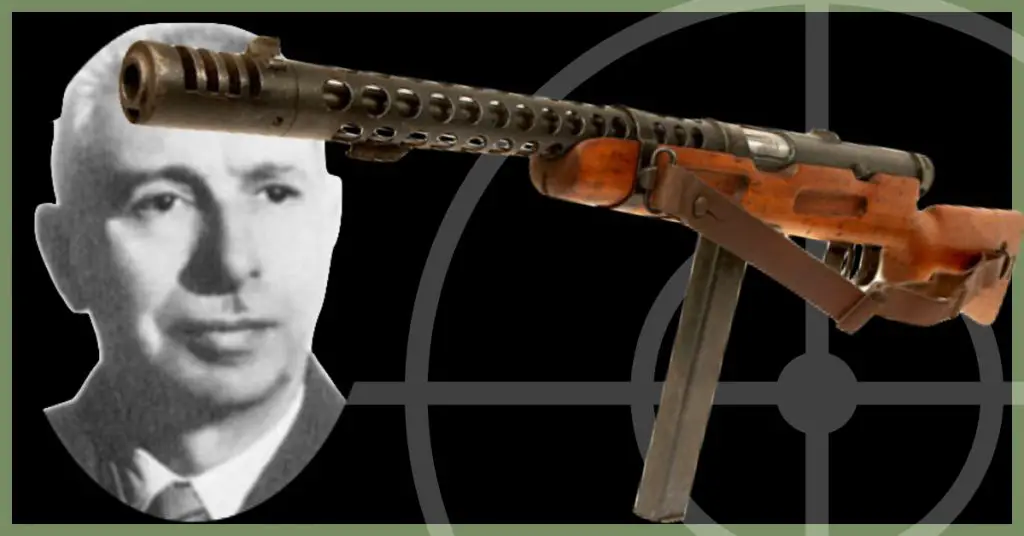
Italian firearms designer Tullio Marengoni created the MAB 38.
Origin
Designed by Italian Firearms engineer Tullio Marengoni, the Beretta Model 38A owes its origin to the Beretta modello 1918 submachine gun, which itself is modeled after the Villar Perosa machinegun of WWI. Proved to be a highly successful weapon, the M1938 series remained in production until 1962.
MAB 38 Function
Beretta Model 1938 submachine gun served the Italian military early on in World War Two. However, it had a complicated design. So efforts were made to increase production and minimize the cost.
Manufactured at the Beretta factory in Gardone Valtrompia, Brescia, the MAB 38 underwent minor modifications during its lifetime. The first model was fully stocked, similar to the Model 1918. It had a folding bayonet and four slot compensator. It mounted an adjustable tangent sight for up to 500 yards as well as a manual safety on the side of the firearm.
As WWII began, Marengoni redesigned the Model 1938A to make it easier and cheaper to build. For instance. sheet metal stampings were used and the barrel shortened. In addition, the four-slot compensator in the MAB 38A was reduced to two-slot. Also, the barrel shroud became omitted completely. Beretta simplified the bolt’s design by adopting a fixed firing pin instead of the VP separate unit firing pin. The result was the MAB 38/42 which debut in 1942.
All models use the blowback function which fires from open bolt. The weapon utilized two triggers. The front trigger for firing semiautomatic shots and the rear trigger for automatic. An unusual feature is that the shell ejects out the left side of the weapon.
The feed system utilized 10, 20, 30, or 40-Round double-stack double-feed detachable box magazine.
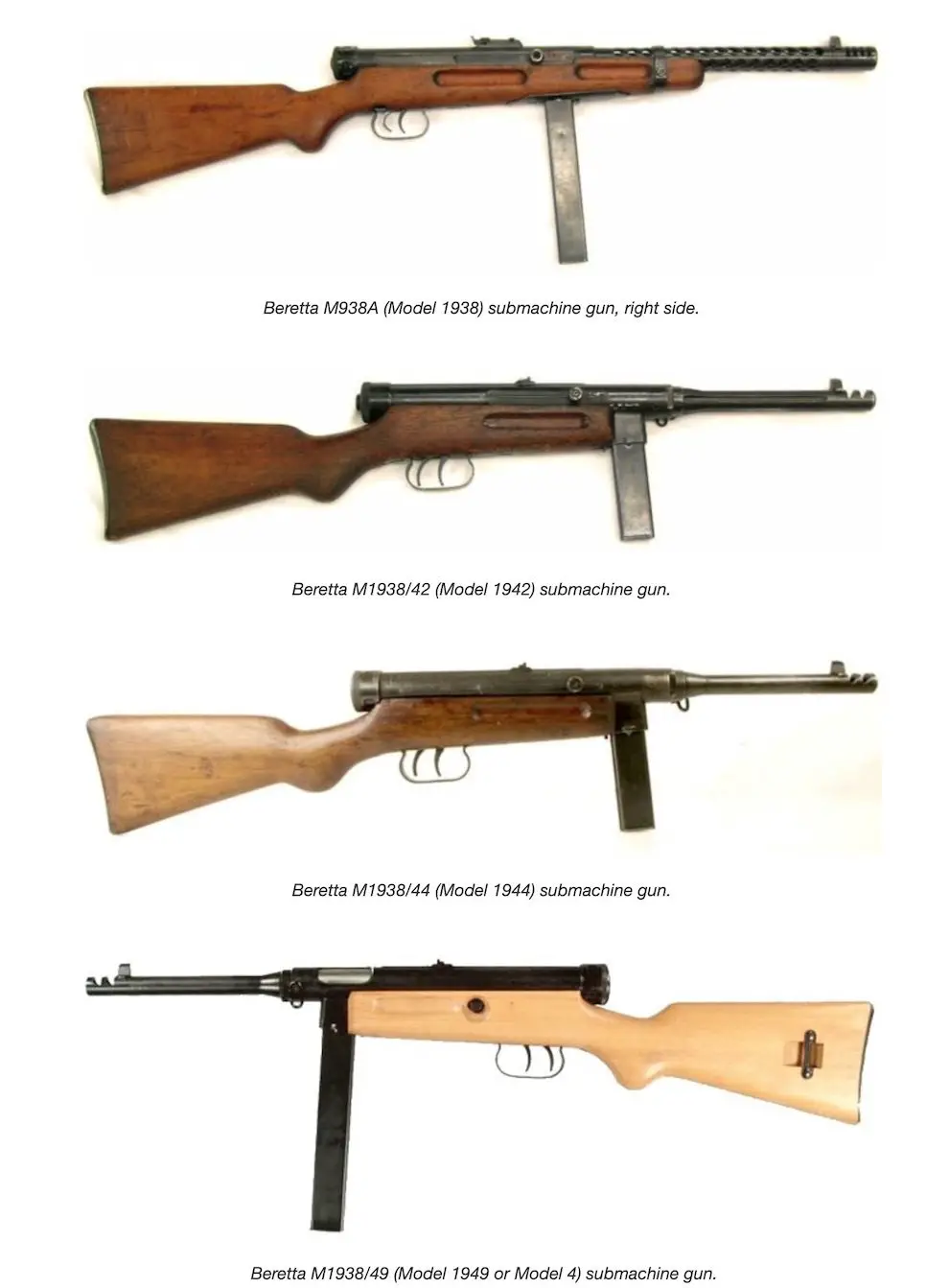
Beretta M1938 variants. Image: modernfirearms.net
Operational Use
The MAB 38 was widely used throughout the war. It served in North Africa and the Eastern Front by the Italian, German and Romanian armies.
It was a prized possession among Allied Forces and German special troops. Until 1943, it was only available to assault and parachute units, Carabinieri and Polizia Africana Italiana. It became more widespread in the Armed Forces of the Republic of Salò, partisans, and Italian units fighting under Allied command.
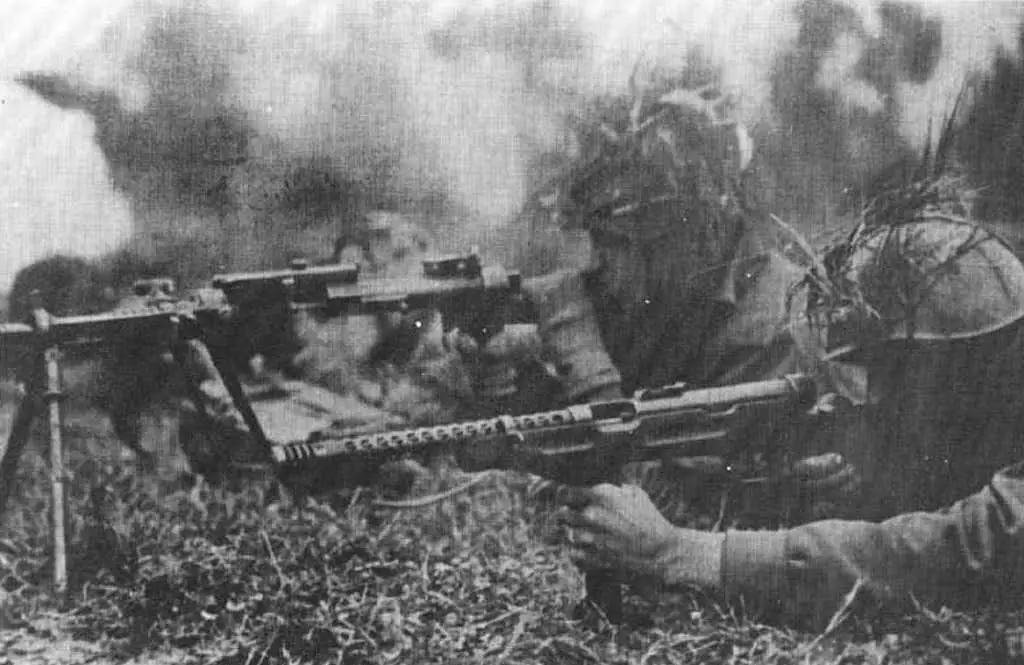
Beretta MAB 38 in action.
Variants
M1938A: The original model weighs 4.2 kg and fires 600 RPM. The length of the barrel is 315 mm. The effective firing range is 200-250 meters. Featured the capability to mount a folding bayonet which became omitted in later models.
38/42: Barrel length reduced to 213 mm and a reduced two-slot compensator. The weapon is lighter, using sheet metal stampings with a dull blue/black finish. A fluted barrel helped dissipate heat and reduce the weight down to 3.27 kg. The RPM reduced to 550. The effective range is 150-200 meters.
M1938/43: Fluted barrel replaced with a smooth configuration. The weapon weighs approximately 3.26 kg. Its effective range remains the same as the 38/42.
38/44: Smooth barrel, but with a slight change in the design of the bolt. Now included a large diameter return spring without guide and weighs 3.2 kg.
Model 1938/49: The weight is 3.25 kg. Barrel length is reduced to 210 mm. Firing range 150-200 meters.
Exports
Exports of Beretta 38/42 submachine guns to various countries occurred during and after the war. However, it should be noted that after Italy’s capitulation, Germany manufactured 145,693 units in 1944 and 85,500 units in 1945. The German designation for this weapon was MP 738 (i).
A portion of foreign users is noted below.
- Between 1941 and 1942 Romania imported 5,000 MAB 38A and 38/42 models.
- The Yokosuka Naval Arsenal of the Japanese Empire obtained 50 out of 350 Model 38/42s ordered in 1943.
- Syria, Pakistan, Iran and Costa Rica imported 38/44 or later models.
- West Germany imported Model 38/49’s in 1951 for its Border Guard.
Specifications
| Specification | MAB Model 38/42 |
|---|---|
| Caliber | 9 mm |
| Total Units | 1,000,000 (all variants) |
| Weight (Empty) | 7 lbs 3 oz (3.27 kg) |
| Weight (w/40 round clip) | 8 lbs 10 oz (3.9 kg) |
| Barrel Length | 7.9 in (20 cm) |
| Length | 31 in (80 cm) |
| Action | Blowback |
| Muzzle Velocity | 1,410 ft/s (430 m/s) |
| Feed System | 10, 20, 30 or 40-Round Detachable Box Magazine |
| Cartridge | 9×19 mm Parabellum |
| Max Range | 273 - 330 yards (250-300 m) |
Other resources
M.A.B Moschetto Automatico Beretta, 1974